







Carbon Accounting
Satisfaction Value For Money Solution
Business Accounting Management
Inventory Management Tracking System
It provides transparency into an organization’s environmental impact, fostering accountability and responsible business practices.
Carbon accounting ensures compliance with international standards and regulations, such as the GHG Protocol and ISO 14064
Generate accurate emissions reports to support sustainability disclosures, demonstrate environmental accountability, and communicate your organization's progress.
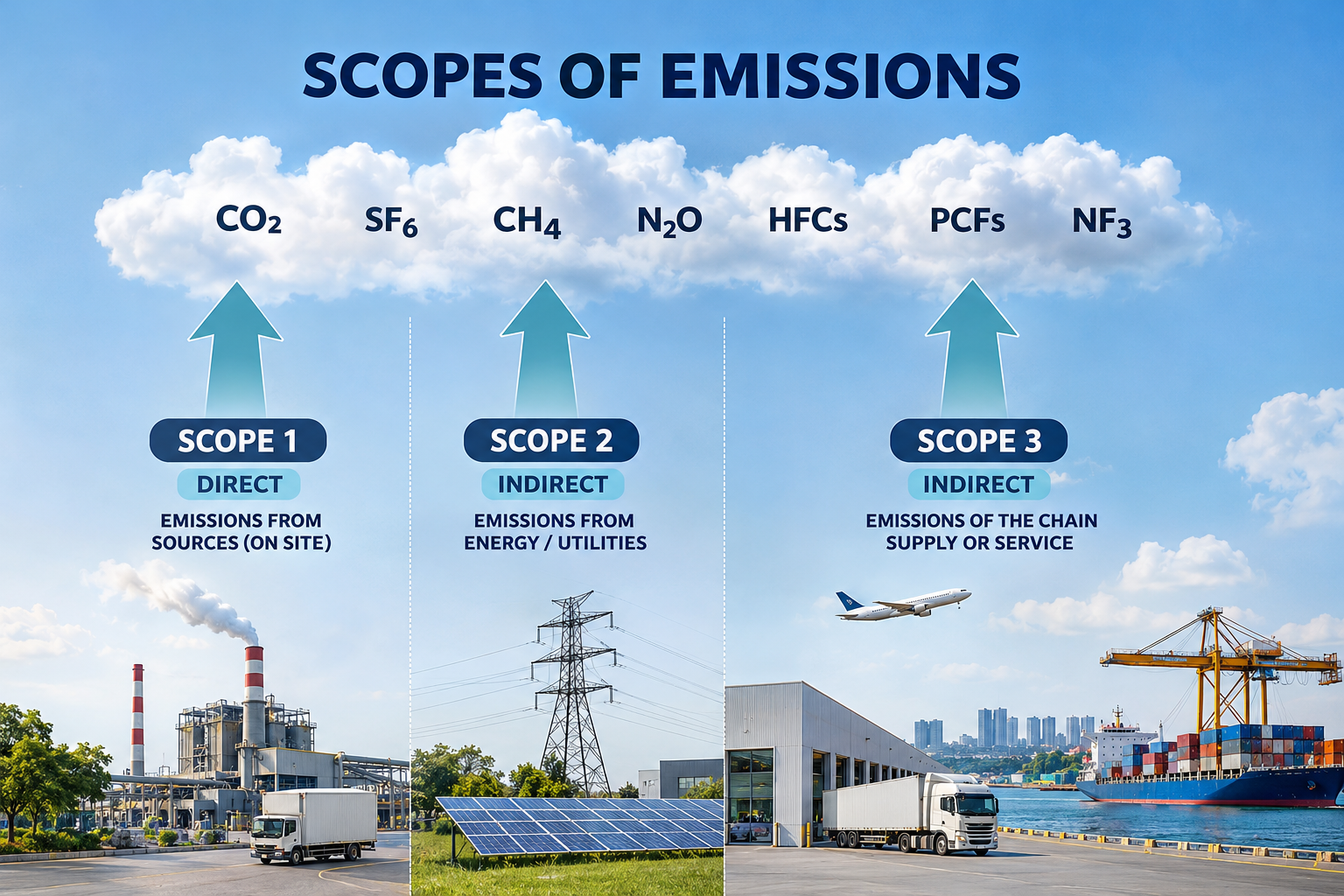
In the world of carbon accounting, emissions are categorized into three distinct scopes:
Scope 1 Direct
These are direct emissions from sources that are owned or controlled by the organization. Examples include emissions from company-owned vehicles, on-site fuel combustion, and process emissions.
Scope 2 Indirect
Scope 2 emissions are indirect emissions associated with the generation of purchased or acquired electricity, heating, and cooling. These emissions occur at the facility where the energy is generated, not at the organization’s facility.
Scope 3 Indirect
Scope 3 emissions encompass all other indirect emissions that occur in the organization’s value chain, including activities like business travel, supply chain emissions, and product transportation.